Heat, Hydration, and Hard Truths: Managing ED Medication Effectively During Summer
Most conversations about erectile dysfunction focus on the usual suspects: stress, age, diet, and underlying health conditions. What rarely makes the discussion is the calendar. Yet for a meaningful number of American men, summer brings a predictable but largely unacknowledged dip in sexual performance and medication effectiveness—one that has less to do with psychology and more to do with physiology.
Heat affects the human body in ways that extend well beyond discomfort. From cardiovascular load to hydration status to the very chemistry of drug absorption, warmer temperatures introduce variables that can quietly work against even a well-managed ED treatment plan. Understanding these dynamics—and making deliberate adjustments—can help men maintain consistent results through June, July, and August.
How Heat Puts Stress on the Cardiovascular System
ED medications in the PDE5 inhibitor class—including tadalafil (Cialis) and sildenafil (Viagra)—work by relaxing smooth muscle and increasing blood flow to penile tissue. They are, at their core, vasodilatory drugs. So is heat.
When ambient temperatures rise, the body responds by dilating peripheral blood vessels to dissipate heat through the skin. This is a normal thermoregulatory response. But when combined with a vasodilatory medication, the cumulative effect can be significant. Blood pressure may drop more than expected, leading to symptoms such as lightheadedness, flushing, rapid heart rate, or general fatigue—none of which are conducive to sexual activity.
For men with pre-existing cardiovascular conditions, this interaction warrants particular attention. If you've noticed that your usual ED medication seems to hit harder or produce more pronounced side effects during summer, heat-induced vasodilation is a plausible explanation worth discussing with your physician.
Dehydration: The Silent Saboteur
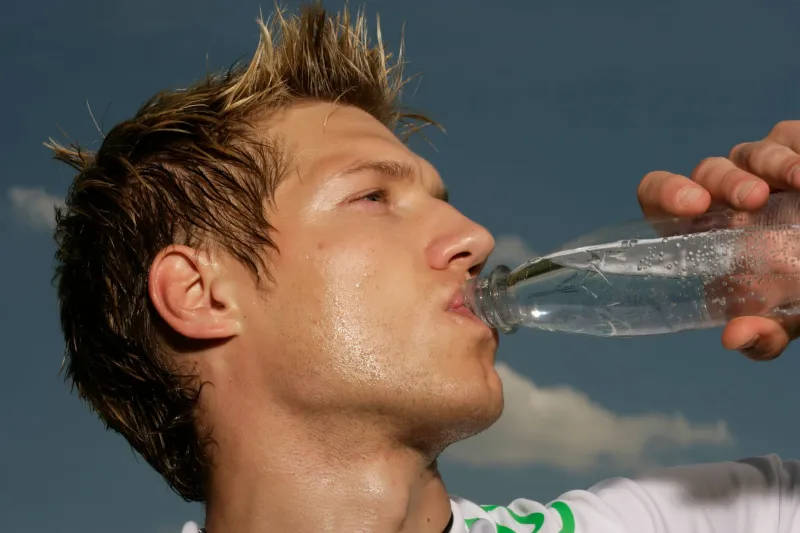
Summer dehydration is a familiar concept, but its specific impact on ED treatment is less widely appreciated. Adequate hydration is foundational to healthy blood volume and circulation—both of which are directly relevant to erectile function. When the body is even mildly dehydrated, blood viscosity increases and overall circulation efficiency declines.
For men relying on ED medication, this matters in at least two ways. First, reduced blood volume can blunt the medication's intended circulatory effect, making it harder to achieve the vascular response needed for a firm erection. Second, dehydration exacerbates the blood pressure drop that can accompany PDE5 inhibitor use in the heat, compounding dizziness and fatigue.
The practical implication is straightforward: staying consistently hydrated throughout summer days—not just in the hours before anticipated sexual activity—should be treated as a component of your treatment strategy, not an afterthought.
Medication Storage in Hot Weather
This is a detail that is easy to overlook but genuinely consequential. Most ED medications should be stored at controlled room temperature, typically between 68°F and 77°F, with allowances for brief excursions up to around 86°F. Summer conditions—particularly in cars, beach bags, or poorly air-conditioned spaces—can easily exceed these thresholds.
Heat-degraded medication may not perform as expected, and the degradation is not always visible. A pill that has been stored in a hot car for several days may look identical to one stored properly but deliver a fraction of its intended potency.
If you travel frequently during summer or live in a region with extreme heat, review your storage practices. Keeping medications in a cool, dry location—not a bathroom cabinet or a vehicle glove compartment—is a simple step that protects the integrity of your treatment.
Timing Adjustments for Summer Conditions
The timing of ED medication use is always important, but summer introduces additional variables worth accounting for. Sexual activity in hot, humid conditions places greater cardiovascular demand on the body. Combined with a vasodilatory drug, this can lead to fatigue, overheating, or discomfort that interferes with the experience regardless of medication effectiveness.
Consider the following practical adjustments:
- Choose cooler times of day. Morning or evening activity, when temperatures are lower and the body is less thermally stressed, tends to be more comfortable and physiologically favorable.
- Allow extra recovery time after outdoor activity. Returning from a run or yard work in 90-degree heat and immediately taking ED medication is not ideal. Give your body time to rehydrate, cool down, and stabilize before dosing.
- Moderate alcohol intake more carefully. Alcohol is a vasodilator and a diuretic, and summer social occasions often involve more of it. The combination of heat, alcohol, and ED medication triples the vasodilatory load and amplifies dehydration risk.
When to Update Your Healthcare Provider
Seasonal changes in ED symptom severity or medication response are worth mentioning to your doctor—not because they indicate something is wrong, but because they provide clinically useful information. Your physician may recommend a dosage adjustment for summer months, suggest switching to a longer-acting formulation that removes some of the timing pressure, or flag cardiovascular concerns that warrant monitoring.
Men who manage ED as an ongoing, adaptive process rather than a static prescription tend to achieve more consistent outcomes. Summer is simply one more variable in that process—manageable, predictable, and worth planning for.
A Season to Stay Ahead of the Curve
Summer in America is synonymous with activity, travel, and intimacy. It should not be a season where ED treatment quietly underperforms because of factors that were never considered. By accounting for heat's physiological effects, maintaining rigorous hydration, storing medication correctly, and timing activity thoughtfully, men can preserve the gains they've worked to achieve year-round.
The season changes. Your treatment strategy can, too.