Behind the Counter or Still Behind a Prescription? The Long Road to an OTC ED Pill in America
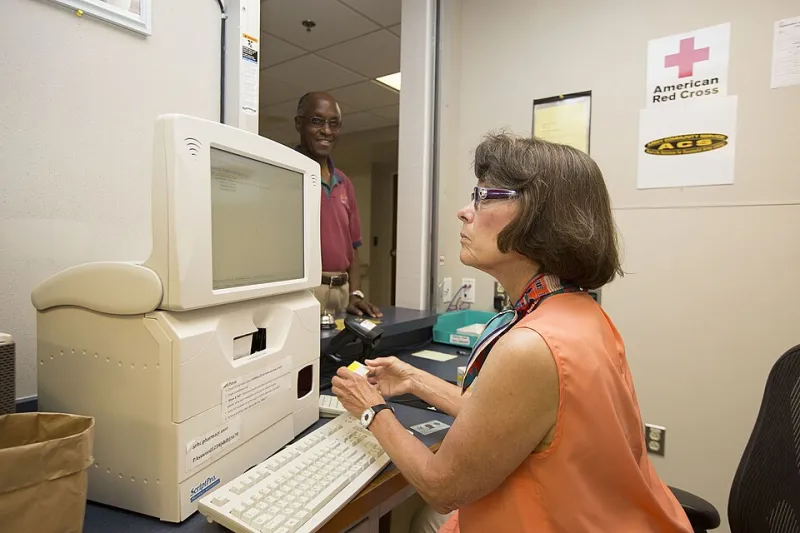
Photo: Damien Salas, Public domain, via Wikimedia Commons
For American men, the pharmacy aisle is a study in contrasts. Allergy remedies, nicotine replacement, and pain relievers sit on open shelves. Erectile dysfunction medications remain behind a prescription barrier. That barrier is not arbitrary, but it is also not permanent. The question worth asking in 2026 is whether tadalafil or another PDE5 inhibitor could ever follow the path of other medicines from prescription-only to over-the-counter status.
The short answer is that the debate is real but the timeline is not short. The longer answer involves FDA switch standards, the UK's pharmacist-guided sildenafil model, the cardiovascular signals that make ED a medical issue rather than a lifestyle inconvenience, and the economics of a market where generic tadalafil is already inexpensive.
Why ED Medications Remain Prescription-Only
Tadalafil and sildenafil are effective, but they are not risk-free. They can cause hypotension, headache, flushing, and dyspepsia. They interact dangerously with nitrates and can potentiate the blood-pressure-lowering effects of alpha blockers. Men with certain cardiac conditions should not use them without careful evaluation. There is also the rare but serious risk of priapism and reports of sudden vision or hearing changes.
More importantly, erectile dysfunction can be an early marker of vascular disease. A man who cannot get an erection may have endothelial dysfunction, diabetes, hypertension, or lipid problems that deserve attention. A prescription model creates a checkpoint where those issues can be raised. An open-shelf model risks turning a sentinel symptom into a self-treatment decision.
The FDA Switch Playbook
Moving a drug from prescription to over-the-counter status in the United States is not a matter of public demand. The manufacturer must file a supplemental new drug application and demonstrate that consumers can use the product safely without professional supervision. That usually means label comprehension studies, self-selection studies, and actual-use studies. Regulators want to know whether people can identify contraindications, whether they will consult a clinician when needed, and whether real-world use matches the label.
For an ED drug, those studies would be unusually difficult. The label would need to screen for nitrate use, cardiac risk, and drug interactions in plain language. It would need to explain that the medication does not protect against sexually transmitted infections and does not treat the underlying cause of ED. It would need to account for men who are taking multiple medications and may not know their names.
The UK Model: Pharmacist-Guided Sildenafil
The closest real-world test is the United Kingdom's reclassification of sildenafil 50 mg from prescription-only to pharmacy medicine in 2017. The change allowed men aged 18 and older to obtain sildenafil after a pharmacist-led consultation. It was not an open-shelf decision. Pharmacists used a questionnaire to screen for contraindications, including heart conditions and nitrate use, and referred men to a doctor when appropriate.
The UK model demonstrated that demand exists and that pharmacist gatekeeping can work. It also revealed limits. A questionnaire is not a clinical examination. Pharmacists have limited time and no access to full medical records in many settings. The model works best when the pharmacist knows the patient or when the supply chain is tightly regulated. It is not a pure over-the-counter model, and the United States has no exact equivalent.
Behind the Counter Is Not a U.S. Legal Category
Americans sometimes hear the phrase behind-the-counter and assume it is a formal FDA category. It is not. The FDA regulates drugs as prescription or over-the-counter. Some products, such as pseudoephedrine, are kept behind the counter for law-enforcement reasons, not because the FDA created a special pharmacist-only class. A true pharmacist-supervised ED model would require changes in federal and state law, plus new standards for consultation, documentation, and liability.
That does not make it impossible. It makes it a regulatory project rather than a marketing decision.
Screening Is the Hard Part
The strongest argument against easy access is that ED medications are not like antihistamines. They affect blood pressure, interact with common cardiac drugs, and are used by men who may have undiagnosed heart disease. A pharmacist can ask about nitrates and chest pain, but a man may not know that his occasional heartburn medication or recreational drug use matters. A telehealth prescriber can take a fuller history, but even that model depends on honest answers.
A switch would also need to address dosing. Tadalafil is available as a daily dose and as an as-needed dose. Sildenafil has different timing and food considerations. An over-the-counter label would have to simplify without oversimplifying, and that is a narrow lane.
What OTC Status Would Do to Price
Price is often the assumed benefit of over-the-counter status, but the effect is not guaranteed. Generic tadalafil is already available at low cash prices in many U.S. pharmacies. An OTC version would eliminate the cost of a prescription visit for some men, but it might add a pharmacist consultation fee or a higher retail markup. Insurance plans generally do not cover over-the-counter products, so men who currently pay a small copay might pay more at the counter.
The bigger pricing effect could be psychological. An OTC product signals normalcy and convenience. That can increase demand, but it can also encourage men to skip the conversation about why they need the medication in the first place.
What to Watch in 2026 and Beyond
The regulatory conversation is moving slowly. Watch for FDA public meetings on self-care switches, state pharmacy board proposals for pharmacist-prescribed ED care, and data from telehealth platforms that already provide prescription ED treatment. The UK experience will remain a reference point, but it is not a template that can be copied without adaptation.
For now, the practical advice is unchanged. If you are struggling with ED, do not wait for an over-the-counter miracle. Talk to a clinician or pharmacist about your history, your medications, and your cardiovascular risk. A prescription remains the most reliable route to a safe, effective treatment plan. The counter may move closer to the shelf in the future, but the need for informed screening will not disappear.