Supplements, Lifestyle Changes, or Prescription Medication: A Clear-Eyed Guide to Choosing Your ED Treatment Path
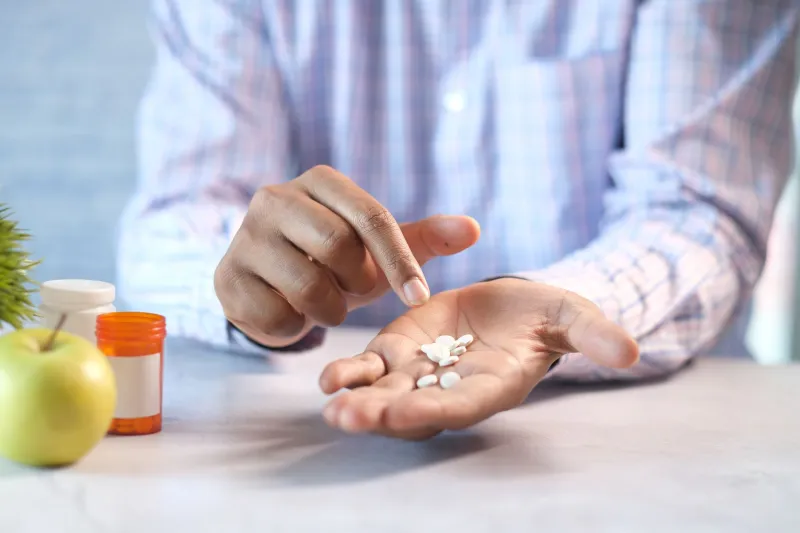
Walk into any health food store or scroll through a men's wellness website and you will encounter dozens of products promising to restore sexual vitality naturally, safely, and without a prescription. The appeal is understandable. Many men prefer to explore non-pharmaceutical options before committing to a doctor's visit, and the cultural narrative around "natural" solutions carries an implicit promise of fewer trade-offs. But the question worth asking is not whether natural approaches feel preferable—it is whether they work, and for whom, and under what circumstances.
This article does not advocate for one category of treatment over another. Instead, it applies the same analytical standard to all options and presents the clinical evidence as it actually stands, so that men can make decisions grounded in data rather than marketing.
What the Research Actually Shows About Natural Approaches
L-Arginine
L-arginine is an amino acid that the body converts into nitric oxide, the molecule responsible for relaxing smooth muscle tissue in penile blood vessels and enabling erection. The theoretical mechanism is sound, and several studies have explored its clinical utility.
The evidence is modestly promising at higher doses. A meta-analysis examining L-arginine supplementation found statistically significant improvements in erectile function compared to placebo, particularly in men with mild to moderate ED and documented nitric oxide deficiency. However, the effect sizes in most trials are considerably smaller than those observed with FDA-approved phosphodiesterase type 5 (PDE5) inhibitors, and optimal dosing—typically 3,000 to 6,000 mg per day—is substantially higher than what most commercial supplements provide. Gastrointestinal side effects at these doses are also not uncommon.
Bottom line: L-arginine shows genuine but limited efficacy, most applicable to men with mild ED who have confirmed low nitric oxide levels.
Panax Ginseng
Often marketed as "herbal Viagra," Panax ginseng (Korean red ginseng) has a longer evidence trail than most botanical supplements in this category. Several randomized controlled trials have demonstrated improvements in erectile function scores, and a 2021 systematic review concluded that it performs better than placebo across multiple outcome measures.
The effect is real but modest. Ginseng appears to support nitric oxide synthesis and may have mild dopaminergic effects that enhance libido. It is unlikely to produce the consistent, reliable results that many men require—particularly those with moderate to severe ED or a significant vascular component to their condition.
Bottom line: A reasonable adjunct for men with mild dysfunction or those seeking libido support, but insufficient as a primary treatment for most presentations.
Acupuncture
Acupuncture for ED has been evaluated in a number of small trials, primarily examining psychogenic erectile dysfunction—cases driven by anxiety or psychological factors rather than vascular or hormonal causes. Some studies report subjective improvement in sexual satisfaction and reduced performance anxiety. However, the methodological quality of available trials is generally low, blinding is inherently difficult in acupuncture research, and there is no established physiological mechanism linking needle placement to erectile function.
Bottom line: May offer psychological benefit for some men with anxiety-driven ED, but the evidence base does not support it as a primary clinical intervention.
Lifestyle Modification
This category deserves its own designation because the evidence here is substantially stronger than for any supplement. Regular aerobic exercise, dietary improvements consistent with Mediterranean or DASH eating patterns, smoking cessation, weight normalization, and alcohol reduction have all demonstrated clinically meaningful improvements in erectile function in well-designed studies. For men whose ED is primarily attributable to cardiovascular risk factors, metabolic syndrome, or obesity, lifestyle modification is not merely complementary—it addresses root causes that no supplement or medication can fully compensate for.
Bottom line: The single most evidence-supported "natural" intervention available, with benefits extending far beyond sexual health.
The FDA-Approved Standard: What Prescription Medications Offer
Phosphodiesterase type 5 inhibitors—including sildenafil (Viagra), tadalafil (Cialis), vardenafil (Levitra), and avanafil (Stendra)—represent the most thoroughly studied treatments for erectile dysfunction in medical history. Their mechanisms are well understood, their efficacy data is extensive, and their safety profiles have been established through decades of post-market surveillance.
Clinical response rates across this drug class typically range from 60 to 85 percent in appropriately selected patients—numbers that no supplement category approaches. Tadalafil, the active compound in Cialis, offers the additional practical advantage of a 36-hour window of effectiveness, allowing for greater spontaneity compared to shorter-acting agents.
Side effect profiles are real and should be discussed with a prescribing physician, particularly for men taking nitrates or alpha-blockers. But for the majority of healthy men, these medications are well tolerated and represent a clinically rational first-line option.
A Decision Framework for Real Men
Rather than positioning natural and pharmaceutical approaches as opposing philosophies, consider the following framework:
If your ED is mild and situational: Lifestyle optimization, stress reduction, and targeted supplements like L-arginine or ginseng may be reasonable starting points—alongside a medical evaluation to rule out underlying conditions.
If your ED is moderate, consistent, or causing relationship strain: FDA-approved medications offer the most reliable near-term relief while lifestyle changes take effect. There is no clinical or ethical reason to delay effective treatment while experimenting with less efficacious options.
If you have cardiovascular risk factors or metabolic disease: Lifestyle modification is non-negotiable, but prescription medication provides meaningful quality-of-life improvement while those changes are implemented.
If psychological factors are prominent: Combining pharmacological treatment with therapy or counseling typically produces better outcomes than either approach alone.
In all cases: A conversation with a licensed physician is the appropriate starting point. Self-treating with unregulated supplements carries its own risks, including undisclosed drug interactions and inconsistent product quality.
The Honest Takeaway
Natural approaches to ED are not fraudulent—some carry genuine, if modest, evidence. But they are not equivalent to prescription medications in efficacy, and the decision to pursue one over the other should be based on clinical reality rather than cultural preference. The goal is not to take the path that feels most virtuous. The goal is to restore sexual function effectively, safely, and as quickly as the evidence supports.